

The Benefits of Physical Therapy as a First Response for Pain Management
You may be astounded to learn that more than 100 million people in the United States alone wrestle with untreated pain according to a recent Institute of Medicine research estimate This is an incredible 30% – give or take – of the United States population!
More specifically, the prevalence of pain tends to be in higher quantities for female patients, roughly 34% of females, than their male counterparts at 26%. Gender is not the only factor to consider, this study also shows there is an increase in occurrences and diagnosis of chronic pain as patients age.[1]
Chronic pain left untreated is a serious issue, and recent studies are suggesting it is actually an epidemic. There are many methods of pain management, but the benefits of physical therapy to treat pain cannot be overlooked! Before we go further and discuss physical therapy and pain management, let us begin by starting with a simple question. How does untreated pain affect us?
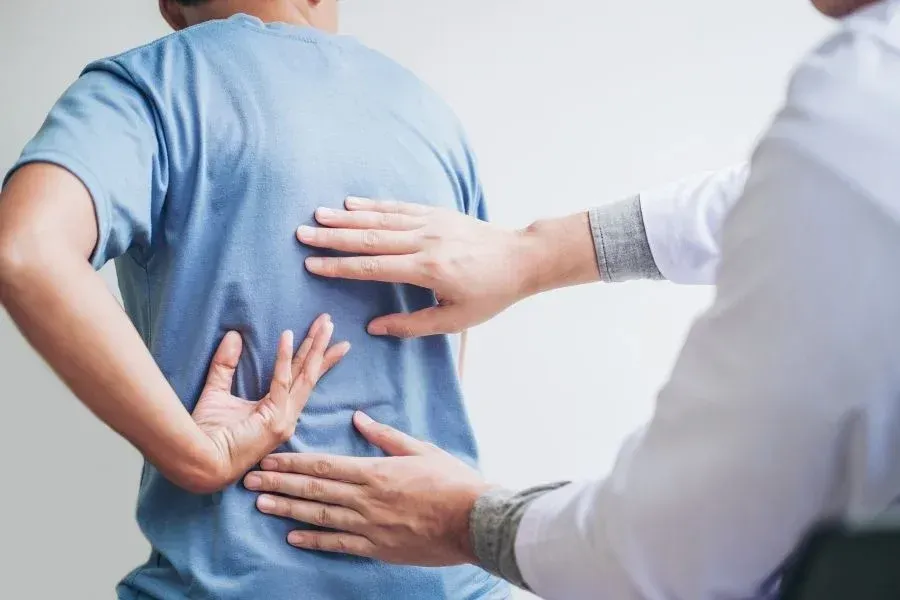
How Does Pain Affect Us?
Pain can affect every area of our day-to-day life. It can affect our work, our sleep, and even our ability to enjoy our relationships. Pain left untreated can gradually affect our stress levels and ultimately have a negative impact on our work performance, our emotional health, and our physical availability for those we love.
In a recent study, the statistical prevalence of initial lower back pain was just slightly above eight percent. Treatment and management of lower back pain cost Americans approximately $86 billion dollars in 2005.[2]
For another common ailment, osteoarthritis, pain was prevalent in just under four percent of cases.[3] In this same study, about half of patients surveyed as sufferers of chronic pain reported that they experienced daily pain. The mean of those surveyed, just over 30%, reported that in the recent three months, their pain intensity was severe. Meaning they scored their pain as greater than or equal to seven on a scale ranging from zero to ten.[4]
How Do We Currently Address Pain Management in North America?
Now that we have clarified exactly what we mean by pain and who suffers from it, we should talk about some treatment options. As we discussed earlier in this post, nearly one in three Americans suffer from pain. That number is astounding, so surely the medical community has figured out the best way to bring about healing from pain, right? Sadly, this is not the case. So, what are your treatment options for dealing with pain?
Medication is a popular remedy to manage pain. When a patient suffers from an ailment, the general first line of medical care is the primary care doctor. What role, if any, does a primary care doctor play in pain relief using medication? A recent study provides this shocking information:
The National Survey on Drug Use and Health estimated that 1.8 million people had a prescription pain reliever use disorder and 11.5 million misused prescription pain relievers in 2016. An estimated 215 million opioid prescriptions were dispensed by retail pharmacies in 2016, reaching a rate of 66.5 dispensed opioid prescriptions per 100 persons in the United States. Of these opioid prescriptions, 45% were written by primary care clinicians.[5]
Nearly half of the prescriptions for opioids are prescribed by a primary care doctor to help their patient manage their pain.
Another common go-to plan of treatment is the use of magnetic resonance imaging or MRIs, CT scans, or other imaging techniques. Health Services Research found in 2015 that patients who complained to their doctors about lower back pain were primarily given two options: 45% were sent for MRIs, and 44% were sent to physical therapy. Of the 45% of patients who were initially sent for an MRI, 29% of the were eventually sent to physical therapy.[6]
Why Are Other Pain Relief Techniques Inadequate?
In the United States, the annual cost of daily and chronic pain upon the public was an estimated $635 billion in treatment and lost productivity.[7] Further, the misuse of potent opioid painkillers, meant to help manage pain, can increase the risk of addiction and abuse.[8] In 2017, the Department of Health and Human Services declared opioid abuse to be a public health emergency.[9] An estimated 10 million Americans misused prescription opioids in 2019.[10]
As for the MRIs and other imaging techniques, these procedures are costly and often waste time as the majority of patients end up utilizing physical therapy to find relief. The average cost of imaging in the Health Service Research projects was $1,306 in 2015[11]. And of course, that cost has increased in the seven years since that survey was taken.
Can Physical Therapy Help with Pain Management?
Can physical therapy as a first response to pain produce results? At Rock Valley Physical Therapy, we believe “physical therapy services are for anyone struggling to complete recreational or daily activities due to pain, weakness, stiffness, or imbalance” and we are here to serve you.
How does physical therapy practically help pain? By using a series of flexibility and strengthening movements to enable you to exercise and move with more efficiency and less pain or discomfort.
Typically, your physical therapist will ask questions and learn as much as they can about your pain. Then, your physical therapist will assign movements that are designed to increase gradually. These are all personal and specific to you and according to your own abilities.
Additional movements and exercises will be introduced to help you improve coordination and reestablish movement. These work together to reduce the strain, tension, and stress on your taxed body. Ultimately, this combination of movements and exercises will aid in decreasing the pain you are experiencing.
How does this work? Remember, the body has danger receptors and not pain receptors. So, pain is an output signal from the patient’s brain rather than an input signal our body sends to tell the patient they are hurting.[12]
By strategically introducing a specific exercise program, it will aid in training your mind to sense the area where you are experiencing pain, but without the “danger messages” i.e., the sensitivity will be reduced.[13]
What are the Benefits of Using Physical Therapy as a First Response for Pain Management?
We now know that physical therapy for pain is an extremely beneficial solution. But what are the other benefits of physical therapy for treating pain? Cost and efficiency are at the top of the list!
The Health Service Research survey found that patients who received physical therapy for lower back pain began treatment on average just eight days after they first met with their primary care doctor. Of those, only one in five would eventually go on to require an MRI or other imaging procedure.[14]
Research shows that the average cost of physical therapy was $504 in 2015. This is one-third or 33% of the cost of one single MRI.[15]
Further, by using physical therapy for pain, patients are protected from the harmful long-term effects or risk of opioid addiction.
Are You Ready to Heal?
Pain is far more prevalent in our society than it was even a decade ago. We know that it can be scary to deviate from traditional forms of treatment and try something new. It is your body, so we pose this question for you – do you want to simply manage your pain, or do you want to find long-term relief? Our bodies are amazing and heal, that we can promise, but we cannot promise complete and total healing. We will work with you to find the best, safest, and most holistic treatment for you.
Get back to the life you want to live! Click here now to schedule an appointment.
More Tips, Insights & Recovery Advice