



Holiday Decorating: Protect Your Back and Joints

November 11, 2026

Share this Article:

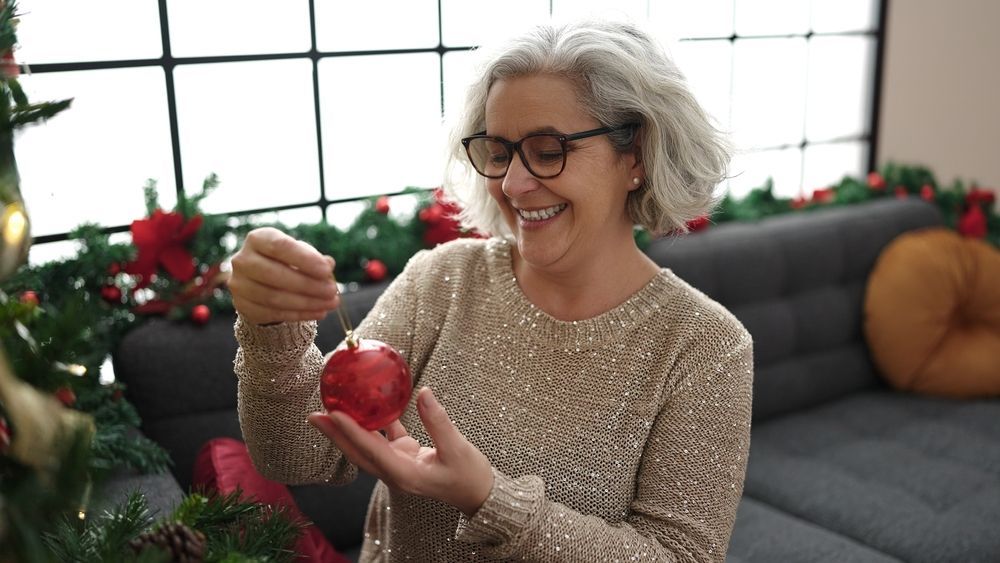
Putting up the Christmas tree, hanging lights, and unpacking decorations can make your home feel festive. But all that lifting, bending, and reaching can leave your back and joints feeling sore long before the holidays begin.


A little preparation can help you decorate more comfortably. Simple changes to how you lift, move, and pace yourself can reduce strain and lower your risk of injury, so you can focus on enjoying the season.

Why Holiday Decorating Can Strain Your Back and Joints

Holiday decorating often involves movements your body isn't used to doing regularly. Carrying heavy storage bins, lifting a Christmas tree, and reaching overhead to hang lights can put extra stress on your back, shoulders, and knees.


The risk increases when you repeat these movements for hours or work in awkward positions. Twisting while carrying decorations, bending over boxes on the floor, or standing on a ladder for long periods can leave muscles fatigued and joints uncomfortable.


Previous injuries, limited mobility, or existing joint pain can make these tasks more challenging. Understanding where strain comes from can help you make small adjustments before discomfort turns into a bigger problem.


Stretch Before and After Decorating

Decorating can feel like a workout, especially if you're carrying boxes, climbing stairs, or reaching overhead. Taking five to 10 minutes to warm up beforehand can help prepare your muscles and joints for the activity ahead.


Start with gentle movements like marching in place, shoulder rolls, and slow trunk rotations. A few sit-to-stands can also help warm up your legs before lifting decorations. Keep movements comfortable and avoid forcing a stretch.


Once you're finished decorating, take a few minutes to stretch your shoulders, back, and legs.
Gentle stretches can help ease muscle tension after a long afternoon of decorating. Hold each stretch for 15 to 30 seconds without bouncing, and stop if you feel pain.


If you already experience back or joint discomfort, a physical therapist can recommend stretches suited to your mobility and needs.

Use Proper Lifting Technique

Heavy storage bins and Christmas trees can strain your back if you lift them awkwardly. Before picking something up, check its weight and clear a path to its destination.


Stand close to the object, place your feet shoulder-width apart, and bend at your hips and knees. Keep the load close to your body while straightening your legs to stand. Avoid twisting your torso while carrying decorations. Instead, turn your whole body and move your feet.


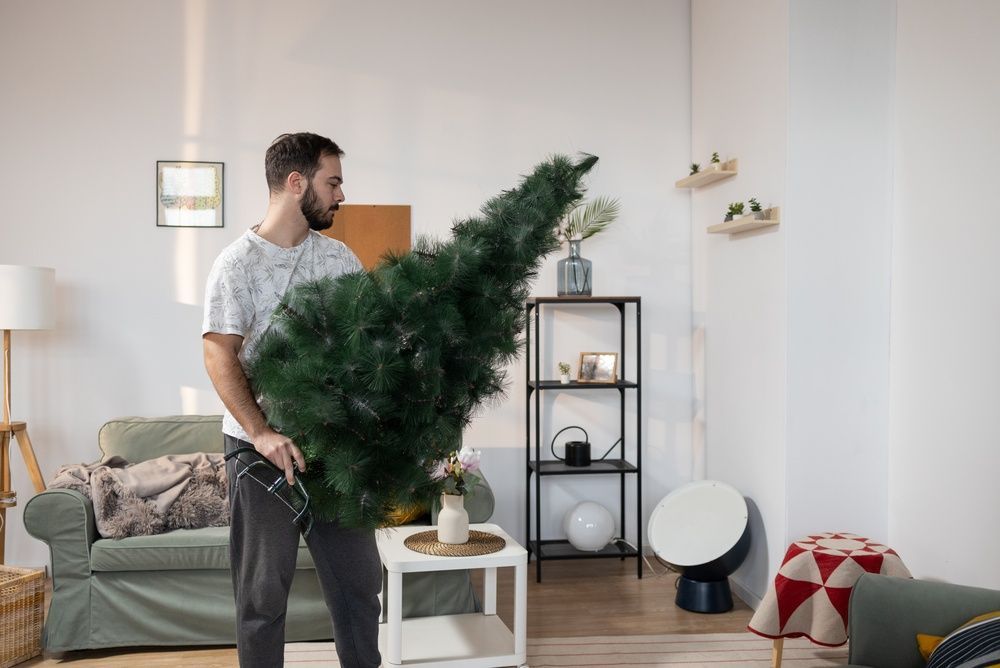
For bulky items like artificial Christmas trees, ask someone to help. Splitting decorations into smaller boxes can also make lifting and carrying easier on your back and joints.

Use Good Posture While Decorating

Hunching over boxes, kneeling on the floor, or looking up at decorations for long periods can leave your neck, back, and shoulders aching. Paying attention to your position can help reduce unnecessary strain.


When decorating the tree, keep your supplies on a table or countertop instead of repeatedly bending to the floor. Move around the tree rather than twisting your back to reach different branches. If you're hanging ornaments near the bottom, kneel on a cushion or sit on a low, sturdy stool.


Change positions frequently, especially during tasks that require prolonged standing or reaching. Small adjustments throughout the day can help you decorate more comfortably and avoid
back pain from holiday decorating.


Avoid Overreaching and Awkward Positions

Stretching too far to hang lights or place ornaments can strain your shoulders, neck, and back. Reaching overhead for long periods can also tire your muscles, making it harder to maintain control of your movements.


Keep decorations within a comfortable reach whenever possible. Move closer to the area you're decorating instead of leaning or twisting your body. For higher spots, use a sturdy step stool on a level surface rather than standing on your toes or climbing onto furniture.


If a decoration requires you to stretch beyond your comfortable range of motion, reposition yourself or ask for help. A few extra steps can save you from unnecessary pain later.

Practice Proper Ladder Safety

Hanging holiday lights or decorating tall trees often means climbing a ladder. A small mistake can lead to a serious fall, so take time to set up safely.


Place your ladder on firm, level ground and check that it's fully open and locked before climbing. Wear shoes that provide good traction, and keep three points of contact while climbing. Never stand on the top step or lean sideways to reach decorations.


Move the ladder whenever an area is out of reach. If you're decorating outdoors, avoid using a ladder on icy or slippery surfaces. Ask someone to help steady the ladder when appropriate, and leave difficult roofline decorations to a professional.

Pace Yourself

It's tempting to finish all your holiday decorating in one afternoon, but hours of lifting, bending, and reaching can leave your muscles fatigued and your joints sore.


Break larger projects into smaller tasks spread across several days. For example, bring decorations out of storage one day and decorate the tree the next. Take short breaks every 20 to 30 minutes to rest, change positions, and drink water.


Pay attention to signs of fatigue, such as struggling to lift boxes that felt manageable earlier. Rushing to finish when you're tired can lead to poor lifting habits and unnecessary strain. Give yourself enough time to enjoy decorating without pushing your body too far.

Know When Pain Means You Should Stop

Mild muscle soreness after decorating is common and usually improves within a few days. However, sharp pain, joint swelling, numbness, or discomfort that worsens during activity can signal a problem.


If pain develops, stop decorating and give your body time to recover. Don't push through discomfort just to finish the job.


If symptoms persist, a physical therapist can identify possible causes and recommend treatment. Seek prompt medical attention for severe pain, significant weakness, or new bladder or bowel control problems. Addressing pain early can help you avoid a longer recovery.

Protect Your Back and Joints This Holiday Season

A little planning can make holiday decorating easier on your body. But if back or joint pain lingers after the decorations are up, it may be time to take a closer look at what's causing it.


At Rock Valley Physical Therapy, our therapists can identify movement limitations, address discomfort, and help you build strength for everyday activities.


Make your comfort a priority this holiday season.
Schedule an evaluation at Rock Valley Physical Therapy to address nagging pain before it interferes with your plans. You can get started without a physician referral, though some insurance plans may have additional requirements.

Connect With Us:

More Tips, Insights & Recovery Advice

Two people practicing yoga on mats, one in a maroon top in a tabletop pose reaching forward.
November 9, 2026
Stay active and pain-free this winter with practical tips for exercise, joint health, fall prevention, and knowing when physical therapy can help.
Person leaning on a table, covering their face in a bright room with a lamp and potted plants.
By Kylie Williams • November 9, 2026
Change, positive, career-and-patient-care-enhancing change, is one of the many things that is unique and special about every Rock Valley Physical Therapy clinician. Forever working to better one’s practice is a cornerstone of “The Rock Valley Way.’’ In August of 2024, Leslie Brant (Foley), PT, DPT, FAFS, CIDN, who had fashioned a tremendous two-decade career – joined the Rock Valley Physical Therapy family, putting the legacy of Bondurant Physical Therapy & Sports Medicine – of which she founded – in the hands of like-minded therapists. “It (Rock Valley) is a therapist-owned organization with similar values,’’ Brant said as to why she sold her Bondurant, Iowa-based practice and joined forces with Rock Valley. “At the core, we both care about helping people feel better and move better, and that alignment made it the right fit.’’ The opportunity to concentrate solely on patient care has allowed Brant the opportunity to add to her niche practice, working to become certified in vestibular rehabilitation (VRT), an exercise-based therapy designed to treat disorders of the inner ear and the central nervous system. Its goal is to alleviate symptoms like dizziness, vertigo (the room spinning), imbalance, and motion sensitivity. It was the perfect step for Brant along her path of bettering the lives of others. “ Vestibular is a unique specialty,’’ said Brant, who calls Rock Valley’s Bondurant clinic (85 Paine Street Southeast # B, Bondurant, (515) 528 2326) home. “People can wake up one day and feel like their world is spinning. It’s an area where physical therapists can play a significant role in helping people regain their lives. In our community, I’ve seen a growing number of individuals dealing with dizziness and balance disorders. “While some conditions, like acoustic neuroma, are considered rare (roughly 1 in 100,000 per NIH data), we’ve seen a higher occurrence locally in recent years,’’ Brant added. “These individuals need the right support, and I want to be as equipped as possible to help them recover.’’ A gifted, compassionate, and knowledgeable therapist, Brant – who also sports an amazing sense of humor – said the goal with her practice is to always stay relevant but expand to help those in need. “The decision is not about adding initials behind my name,’’ Brant said. “I have plenty. It is about continuing to learn the most up-to-date information so I can better serve our community and provide the best care possible. The driving factor is what I’m seeing in our community. There seems to be an increase in people experiencing vertigo and vestibular issues, and I wanted to better understand the underlying pathophysiology, along with how to effectively diagnose and treat these conditions. Ultimately, it’s about helping people get back to living their lives.’’ A Davenport, Iowa native, who earned her undergraduate degree from St. Ambrose University and received her Doctorate in Physical Therapy from Des Moines University, Brant said an accident involving her father drew her a career as a therapist. She lauded Bondurant clinic manager Chris Cass, PT, DPT, for playing a positive and significant role in encouraging her to seek the certification. “My dad, when he was a child, was involved in a fire and sustained burns over a large portion of his body,’’ Brant said. “Hearing about his recovery process and the role rehabilitation played in helping him regain his life had a big impact on me growing up. That experience inspired me to pursue physical therapy and help others do the same." “And, over time, Chris encouraged me to pursue this certification, and seeing the value of it firsthand made a difference,’’ she added.” It’s clear that the coursework continues to evolve with the latest information, which reinforces its relevance. I appreciate opportunities like this that allow us to continue growing and better serve our patients and community.’’ By: Johnny M arx, Rock Valley Storyteller