

IT Band Hip Pain: Causes & Treatment

September 25, 2025

Share this Article:

If you’ve ever felt a sharp, nagging pain on the outside of your hip, especially after running, biking, or even just walking uphill, you might be dealing with something called IT band hip pain. It’s a common complaint amongst athletes and active individuals, but the good news is, there’s a lot you can do to relieve and prevent it.

What Is the IT Band and How Does It Affect the Hip?

The iliotibial band (IT band) is a long, thick band of connective tissue that runs along the outside of your thigh. Starting at your hip, all the way down to your shinbone (tibia). Think of it like a stretchy, supportive strap that helps stabilize your leg as you move.


The IT band works closely with the muscles of your hip and thigh to keep your knee and pelvis aligned. But when it becomes tight, irritated, or inflamed, it can rub against the bony structures near your hip and knee. This can lead to pain, stiffness, and discomfort.


When the irritation happens near the top of the band (closer to the hip), it’s commonly referred to as IT band hip pain or proximal IT band syndrome.


Common Causes of IT Band Hip Pain

IT band hip pain often develops from overuse, but a few key factors can increase your chances of experiencing this painful condition:


  • Repetitive activities like running, cycling, hiking, or walking long distances
  • Poor biomechanics, such as overpronation, leg length differences, or weak core/hip muscles
  • Sudden increases in activity level or intensity
  • Improper footwear or unsupportive surfaces
  • Tight hip or thigh muscles pulling on the IT band


Over time, these stresses cause the IT band to tighten and become inflamed, leading to a burning or aching sensation on the outer hip.


Signs and Symptoms to Watch For

Wondering if your pain could be IT band-related? Here are some common red flags:


  • A sharp or aching pain on the outer side of the hip, especially with movement
  • Discomfort that worsens with activity, particularly running or climbing stairs
  • Tenderness when pressing on the outer hip or thigh
  • A feeling of snapping or popping near the hip joint
  • Pain that may radiate down the thigh, but usually doesn’t extend past the knee


It’s important not to ignore these symptoms. Left untreated, IT band issues can worsen and start affecting your movement patterns, leading to more widespread pain and compensation injuries.


Who’s Most at Risk for IT Band Issues?

While IT band hip pain can affect anyone, some people are more prone to developing it:


  • Runners and cyclists, especially those training at high volumes or increasing mileage quickly
  • Dancers and athletes who perform repetitive leg motions
  • Office workers who sit for long hours with poor posture, leading to tight hip flexors and glutes
  • Individuals with muscle imbalances, weak hips, or poor core strength
  • Women, due to differences in hip anatomy that place more tension on the IT band


If you fall into one of these categories and are experiencing outer hip pain, it’s worth getting checked out early, before it becomes a bigger problem.

How Physical Therapy Can Help

At Rock Valley Physical Therapy, we go deeper than just treating your IT band hip pain. We get to the root of what’s causing it.


Our licensed physical therapists start with a comprehensive movement assessment to identify any muscle imbalances, joint restrictions, or movement patterns that are contributing to the issue. From there, we develop a personalized treatment plan that may include:


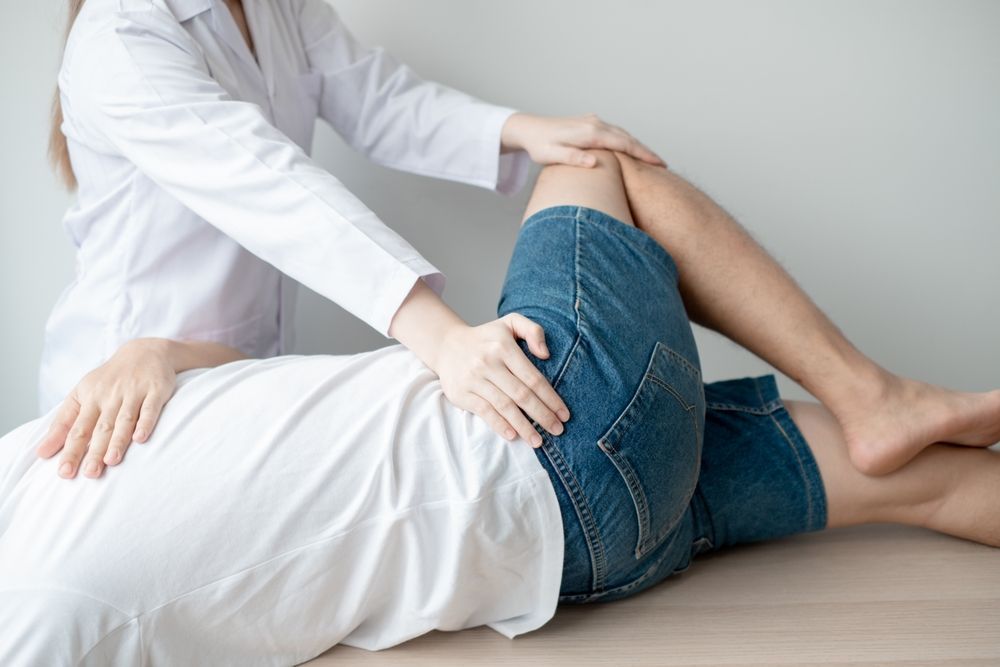
  • Hands-on manual therapy to reduce muscle tightness and improve tissue mobility
  • Targeted strengthening exercises, especially for the glutes, hips, and core
  • Stretching and foam rolling techniques to release tension in the IT band and surrounding muscles
  • Postural training and movement retraining to correct mechanics
  • Dry needling (if appropriate) to address deep muscle tightness and trigger points


Our goal is to not only get you out of pain but to help you move better, prevent re-injury, and return to the activities you love. And remember, you don’t need a referral to start physical therapy with us. We make it easy to get care right when you need it.

Effective At-Home Treatments to Support Recovery

While we always recommend a professional evaluation for persistent pain, there are a few things you can try at home to ease mild IT band hip discomfort:

Foam Rolling

Gently roll along the outer thigh and hip to release tension in the IT band and surrounding muscles. Be cautious, too much pressure can increase irritation, so start slowly.

Hip Stretches

Focus on stretching the glutes, hip flexors, and outer thigh muscles. Try a figure-four stretch, pigeon pose, or side-lying IT band stretch.

Strengthening Exercise

Glute bridges, clamshells, and side leg lifts can help build the hip stability needed to reduce IT band strain.

Ice Therapy

Applying ice to the outer hip can help reduce inflammation, especially after activity.

Activity Modification

Temporarily reduce high-impact activities like running or hill climbing to give the tissues time to calm down.

These strategies can help manage early symptoms, but if the pain sticks around for more than a week or two, it’s time to get a pro involved.

When to Seek Professional Help

If your IT band hip pain is:


  • Not improving with rest or self-care
  • Getting in the way of your workouts or daily activities
  • Causing you to limp, favor one side, or adjust your posture
  • Accompanied by swelling, numbness, or weakness


…then it’s time to reach out to a physical therapist.


At Rock Valley Physical Therapy, our team is trained to pinpoint the exact cause of your pain and build a recovery plan that works for you. Whether you’re an athlete, a weekend warrior, or someone who just wants to move without discomfort, we’re here to help you find lasting relief.


No referral is needed, and we have over 60 convenient locations with flexible hours to fit your schedule. Let us help you take the first step toward feeling better.


Don’t let hip pain hold you back. Schedule your evaluation today with Rock Valley Physical Therapy, and get moving again, pain-free.

Connect With Us:

More Tips, Insights & Recovery Advice

Man standing in front of Rock Valley Physical Therapy sign in a blue-walled office lobby.
By Kylie Williams June 10, 2026
“Max has been the best physical therapist I have had,’’ she said. “He sincerely listened to what I had to say and was knowledgeable when I asked him questions. He continually asked how the exercises and treatments were feeling. He knew the pain I was in because by surgery time, I could barely walk, sit, or sleep."
By ashley johnson June 4, 2026
We often think of physical therapy as something we only need after a sports injury or a surgery. While PTs are certainly experts in fixing knees and backs, their role in your health goes much deeper. In fact, one of the most important muscles a physical therapist can help you strengthen isn't in your leg or your arm, it’s your heart. Heart disease remains the leading cause of death globally. According to recent data from the American Heart Association, someone in the United States dies of heart disease every 34 seconds. The good news? A lot of cardiovascular disease is preventable through lifestyle changes, with regular movement being one of the most powerful medicines out there. The Challenge of Getting Started Current health guidelines recommend that ad ults get at least 150 minutes of moderate-intensity aerobic activity per week. H owever, for many, that goal feels out of reach. Maybe you want to start walking or cycling, but an old nagging injury flares up every time you try. Or it could be the fear of "doing too much" after a health scare that keeps you on the couch. This is where physical therapy becomes your heart's best friend! How a Physical Therapist Supports Your Heart A physical therapist is a movement specialist. They don't just look at a painful joint, they look at how your whole body moves and how your heart and lungs respond to that movement. Here is how they help you go from staying still to getting active: Before Activity: Before you start a new exercise routine, a PT can assess your balance, strength, and cardiovascular response. This makes sure you start at a level that is challenging enough to strengthen your heart but safe enough to avoid burnout or injury. Overcoming Pain: Many people stop exercising because of joint pain. A PT identifies the root cause of that pain, whether it’s a weakness in the hip causing knee pain or poor posture affecting your breathing, and provides a plan to fix it so you can keep your heart rate up without the aches. Recovery and Beyond: If you have experienced a major health event like a heart attack, stroke, or are undergoing cancer treatment, exercise is vital but can be intimidating. Research highlights that supervised exercise programs led by PTs significantly reduce fatigue and improve quality of life for people recovering from complex medical conditions. Managing Chronic Conditions: Physical therapy is increasingly used to help manage conditions that affect the heart indirectly, such as Type 2 diabetes and high blood pressure, by creating sustainable, low-impact movement plans. Movement is Medicine You don’t need to be a marathon runner to improve your heart health. Brisk walking, swimming, or even gardening can make a massive difference. The key is consistency and safety. If you’ve been hesitant to get moving, or if pain is standing in your way, consider a physical therapy evaluation. Your PT can help give your heart the support it needs to keep you moving for years to come.