


Physical Therapy for Parkinson’s Disease

Share this Article:

At Rock Valley Physical Therapy, we believe our bodies are amazing creations capable of incredible feats. Our minds are powerful computers, enabling humankind to build, soar, work, achieve and create. Even though we are remarkable as a species, there are times when we face difficulties, and diseases or sickness can begin to interfere with our abilities and desires. 


The particular focus of this post is the commonly diagnosed but challenging condition called Parkinson’s disease. We are going to discuss what this disease is, how it affects the human body, treatment options, including physical therapy, and how it can help those who have been diagnosed. 


Whether you or a loved one has recently been diagnosed with this disease or you have been living with the symptoms for a while – we hope you will be encouraged and find respite this focused approach to physical therapy can provide. 

Parkinson’s Disease 

Before we discuss physical therapy for Parkinson’s disease, we must first determine exactly what we aim to address in this post. According to the American Brain Foundation, Parkinson’s disease is characterized as a hormone abnormality:


Parkinson’s disease is a chronic, progressive disease in which the body doesn’t make enough dopamine. Dopamine is a neurotransmitter, or “chemical messenger,” responsible for normal body movements. The loss of brain cells that produce dopamine leads to motor issues, such as tremors, slowed movements, and loss of balance and coordination.


April is Parkinson’s disease awareness month. We want to take time to discuss the members of our population who are daily facing this disease. About 1% of adults over the age of 60 years have been diagnosed with Parkinson’s disease, making it quite common amongst those in their golden years.


Though this disease is more common among our elders, approximately one-in-ten individuals experience what is called early-onset Parkinson’s disease. “Early-onset” means that an individual is diagnosed with this disease before the age of 50 years. Physical therapy for Parkinson’s disease is available for all ages, regardless of whether the diagnosis comes as early-onset or later in life. 


Symptoms of Parkinson’s Disease 

As we mentioned above, Parkinson’s disease manifests when the brain begins to produce inadequate supplies of the hormone dopamine. If the onset of Parkinson’s disease is a result of a chemical malfunction in the brain, then how can physical therapy help? To answer this question, we must first discuss what Parkinson’s disease does in the human body and bodily functions. 


There is no existing “test” currently to diagnose Parkinson’s disease. A neurologist will diagnose this condition by learning of specific symptoms. Most people who are familiar with Parkinson’s disease associate this disease with the challenge of subtle muscle tremors. While this is a hallmark symptom, there are often other symptoms that manifest years before the tremors begin. These symptoms could include sudden body movements, sudden vocalizations, anxiety, mood changes, loss of smell, sleep disturbances, and constipation.


Generally, by the time tremors become noticeable, approximately 50% of the specific dopamine-producing cells in the brain have already been lost. As the disease progresses, other symptoms and their severity will be evidenced. These symptoms may include:


  • difficulty making facial expressions
  • rigid muscles
  • slowness of movement
  • balance impairment
  • shuffling walk
  • trembling hands, arms, legs, or feet
  • difficulty with remembering and completing tasks


Treatments for Parkinson’s Disease 

Because there is no specific test to diagnose Parkinson’s disease, the use of scans and imaging equipment can help to eliminate other possible conditions and narrow the field of potential ailments. 


One of the most common treatments for Parkinson’s disease is the use of medications. Often, a patient’s positive reaction to these medications is the tell-tale indicator that the Parkinson’s diagnosis is correct. These medications include Levodopa and Carbidopa (inhaled or by infusion), Sinemet, Rytary, dopamine agonists, monoamine oxidase B (MAO B) inhibitors, and Amantadine to name a few. Some of these medications treat symptoms, others reduce or slow the dopamine breakdown.


Physical Therapy for Parkinson’s Disease 

We have now discussed what Parkinson’s disease is, what the symptoms and onset of the disease can look like for patients, and some of the modern medications that are available to diagnose, slow, and ultimately manage Parkinson’s disease symptoms. What about physical therapy for Parkinson’s disease? Is there PT available to help patients living with this condition? 


At Rock Valley Physical Therapy, we are dedicated to making lives better. This means if we can find a way to help our clients by using physical therapy, then we are eager to do so. We provide physical therapy for Parkinson’s disease to help our clients by: 


  1. increasing the amplitude or breadth of their motor output 
  2. introducing bigger and broader bodily movements
  3. improving client’s self-perception and awareness of their extensions 
  4. improving client’s self-cuing and attention to action
  5. habitually increasing the scale of reach, breadth and movement patterns


LSVT BIG and Parkinson’s 

Another treatment Rock Valley Physical Therapy offers is LSVT. In 1987, Lee Silverman Voice Treatment was introduced, and it has been studied for over three decades. At Rock Valley, we value LSVT because it has been proven successful for participants to gain benefits over a 2 year treatment period. 


What is LSVT BIG? LSVT BIG is an effective, intensive, treatment. In LSVT BIG, our client will receive one on one therapy to work on practical skills, like balance walking, and other activities which are necessary for daily living. Some of these activities include dressing oneself, sitting in a chair and rising from a chair, writing, and other similar skills.[12] 


Are You Ready to Make a Change? 

If you or someone you love has been diagnosed with Parkinson’s disease, then we want you to know you are not alone. At Rock Valley Physical Therapy, we are here for you. 


If you are interested in learning more about physical therapy for Parkinson’s disease, or you would like more information about LSVT BIG treatments, then please contact us today! Click here to request an appointment to begin finding relief from your Parkinson’s symptoms.

Connect With Us:

More Tips, Insights & Recovery Advice

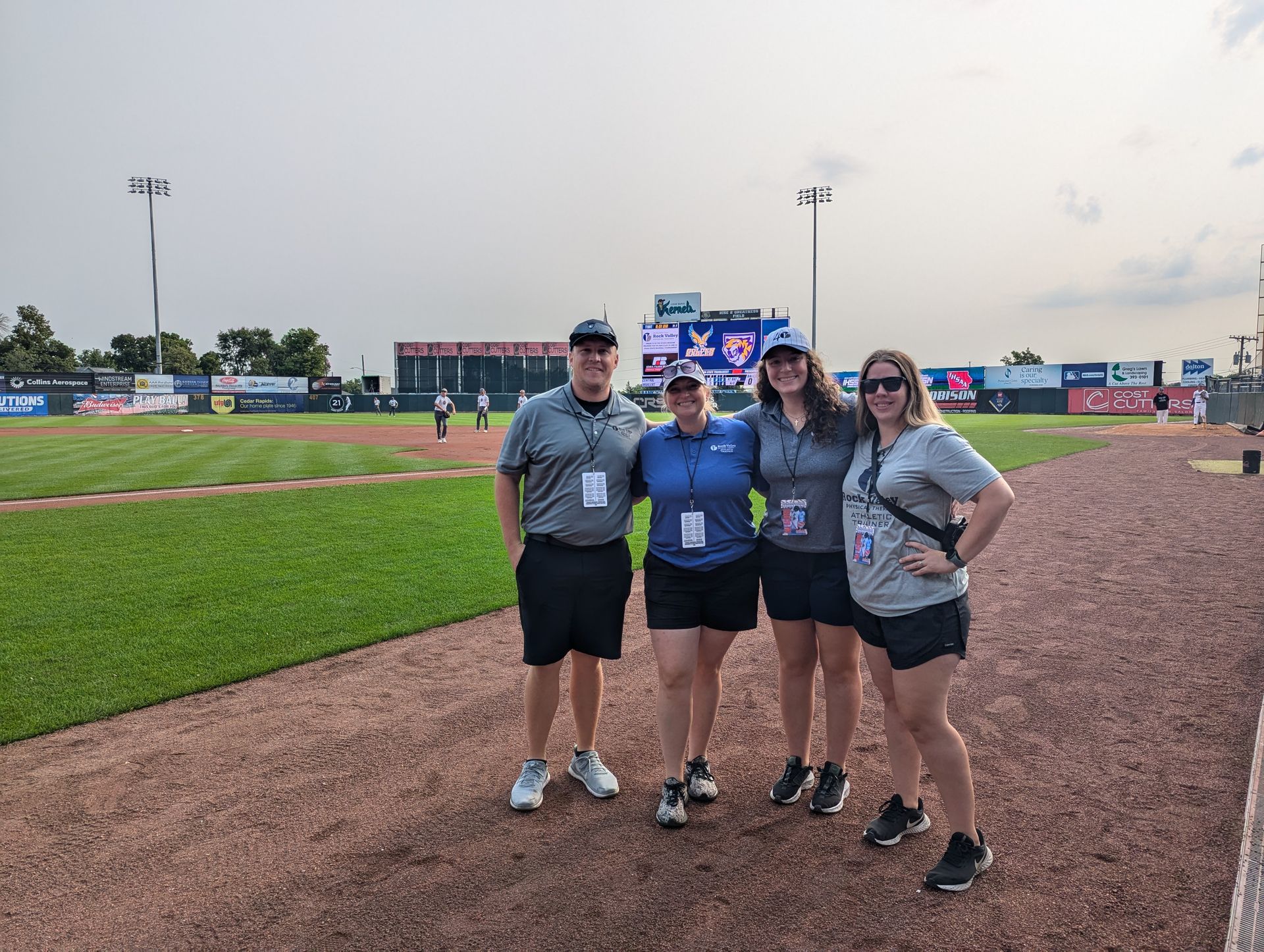
Four people posing on a baseball field, with grass, dirt infield, and stadium signs behind them.
By Kylie Williams July 15, 2026
Rock Valley Physical has again been selected to provide sports medicine coverage for the 2026 IAHSAA Class 3A and Class 4A boys state baseball finals. The tournaments, set for Monday-Friday, July 20-24, will be held at the 5,300-seat Veterans Memorial Stadium, at Cedar Rapids, Iowa, the home of the Class A Midwest League’s Cedar Rapids Kernels, the High A affiliate of the Minnesota Twins. Rock Valley’s Jason Viel, Director of Athletic Training Services, MS, LAT, ATC (Pleasant Valley High School); Blake Anderson, LAT, ATC (Rockridge (Il.) High School); Tyler Beauchamp, LAT, ATC, PTA, FMT (Davenport Central High School); and Jess Rummery MS, LAT, ATC (Bettendorf High School) will be on site to cover quarterfinal, semi-final and final-round action of the tournament. “This is such a great opportunity for Rock Valley to be the premier sports medicine providers for the 3A/4A 2026 IAHSAA State Baseball Tournament,’’ said Rock Valley Physical Therapy’s Misti Thompson, LAT, ATC (Xavier High School, Cedar Rapids). “We were able to cover this event in 2024 and are excited for the opportunity to return and offer our services. With Rock Valley expanding across Iowa and even to neighboring states this allows us to amplify our mission of Making Better Lives while still being to impact traveling teams since we likely have clinics in most of the areas that teams are traveling from allowing continuity of care if needed through our direct access.’’ By: Johnny Marx, Rock Valley Storyteller

By ashley johnson July 10, 2026
Prevent Injuries, Fuel, Hydrate, Recover: Are you a cross country runner looking to have your best season yet? Are you curious what the best ways are to improve your performance? Whether you’re chasing a PR or building a strong foundation, this event would be great for you! Join Rock Valley Physical Therapy for an event open to all ages and sports about the importance of proper fueling, hydration, sleep, and recovery. We will also be covering the specific exercises that every runner should be doing to prevent injuries and help you run stronger! At the end of the event, we will be offering FREE screens and a running gait analysis for anyone who wants one!